
Home / Europe, Germany Tours / Combined Country
10 day(s)
Private
1-40 people
easy
-high.jpg)
-high.jpg)
-high.jpg)
-high.jpg)
-high.jpg)
-thumb.jpg)
-thumb.jpg)
-thumb.jpg)
-thumb.jpg)
-thumb.jpg)
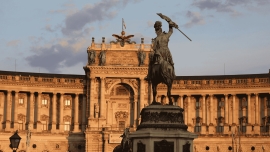
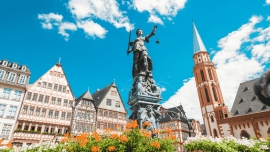
Step into a living fairy tale on this immersive Frankfurt to Vienna Medieval Tour, a carefully curated 10-day journey through Germany and Austria’s most enchanting historic towns. From the vineyards of the Rhine Valley to the fairy-tale castles of Bavaria and the imperial elegance of Vienna, this itinerary blends medieval charm, royal heritage, and breathtaking landscapes. Travel through legendary destinations such as Rothenburg ob der Tauber, Dinkelsbühl, Munich, Salzburg, Hallstatt, and Vienna, discovering fortified towns, ancient castles, baroque palaces, and UNESCO World Heritage Sites along the way. Walk cobbled streets untouched by time, admire half-timbered houses, and experience the legacy of emperors, kings, and composers. Perfect for culture lovers, history enthusiasts, and first-time visitors to Central Europe, this tour offers a seamless blend of medieval history, scenic routes, iconic castles, and imperial capitals—all in one unforgettable journey from Frankfurt to Vienna.
Duration
10 day(s)
Max Group Size
1-40 people
Tour Code
FVMT10D9N
Departure Type
scheduled
Tour Category
Combined Country
Guiding Method
Fully guided
Operated In
Age Requirement
11 - 99
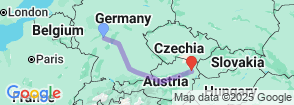
Frankfurt
Vienna
Upon your arrival at Frankfurt
airport, reception through our company and transfer to your hotel in downtown
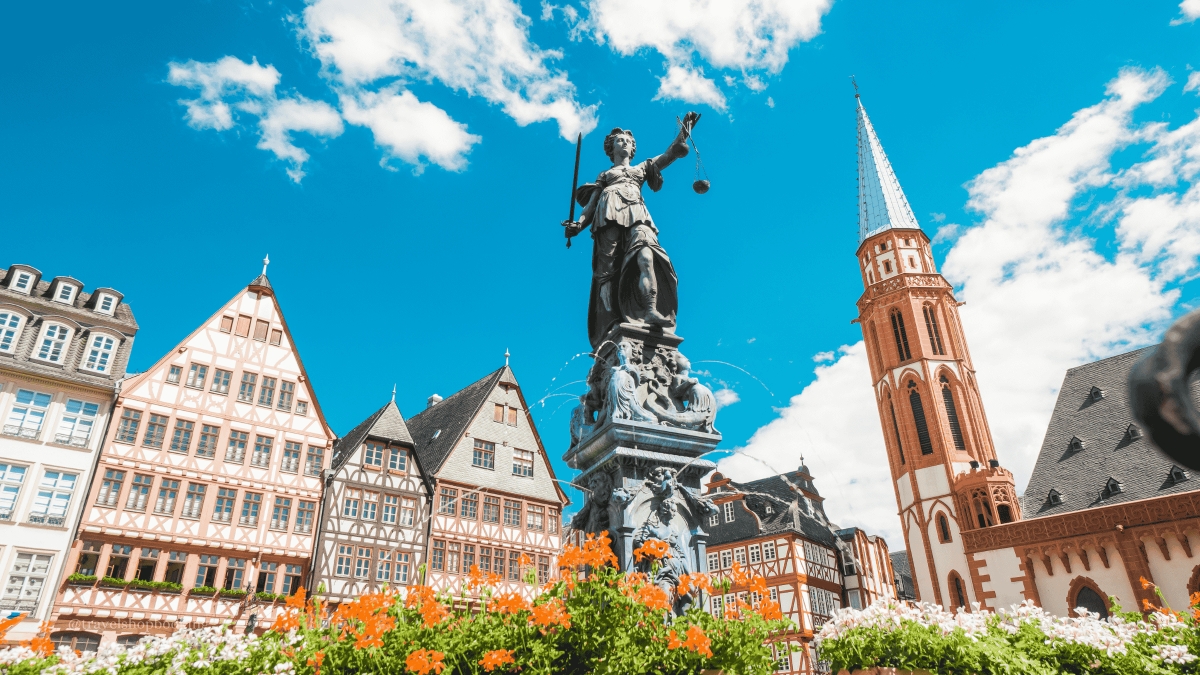
Frankfurt. Rest of the day at leisure for private activities. Visit the Römer
Platz, the main square and walk from there towards the Main River. Crossing the
bridge to the other side will give you a nice view of the Mainhattan skyline,
with interesting Skykrappers. Overnight.
Breakfast at the hotel. Today you
will have a day pass for the regional train to visit the Rhine Valley on your
own. We will follow you virtually of course and help you on this awesome
journey. Your first destination will be Rüdesheim am Rhein known for winemaking,
especially of Riesling wines. In the center, Drosselgasse is a lane lined with
shops, taverns and restaurants. Nearby, Siegfried’s Mechanical Music Cabinet is
a museum of automated musical instruments. Medieval Brömserburg Castle is home
to the Rheingau Wine Museum, exhibiting wine paraphernalia from ancient times
to the present. If you are looking for a special souvenir, there you have
plenty of them, specially the cuckoos clockwork. Continue along the Rhine River
until you reach Koblenz. And note that, as you have a day ticket, you can stop
in every town along the route for a short visit and then continue to the next
point. Koblenz is a medieval city situated at the converge of the Rhine and
Moselle Rivers, famous for its Deutsches Ecke or German Corner. Take a walk
from the train station to this place and you will get an impressive feeling of
the Middle Ages. After this visit, you can return by train to Frankfurt to your
hotel. Overnight. (B)
After breakfast, departure on a private vehicle to explore
the southern region of Germany. Your
first stop will be Würzburg. This scenic university city located on the Main
River in Bavaria is rich with churches, cathedrals and other historical
buildings built in Baroque, Rococo and Gothic style where the huge Residential
Palace takes pride of place. Over 85% of the town was damaged or destroyed in
World War II and Wurzburg became a symbol of German recovery when, over the
next 20 years, the historical buildings were painstakingly and lovingly
restored. Today, all traces of destruction have long gone. Downtown Wurzburg is
a spectacularly pretty part of the city to spend a little time checking out
some of the churches, museums and historical buildings that contain great art.
Your target today is Rothenburg ob der Taube, the most medieval city on this
journey. Seeing Rothenburg ob der Tauber's forty-two gates and towers etched
against the unspoiled countryside from a distance, you'd swear you were looking
at the Fifteenth Century through field glasses. Inside, the town's almost
completely intact walls and carefully-preserved half-timbered houses truly do
bring visitors back in time. The Town Hall Tower beckons with its fine views of
the town and the idyllic surrounding countryside. Check-in at the hotel and
relax a bit because you will need energy to walk around those intact town
walls, a temptation to fully surrender to. Overnight. (B)
Breakfast at the Hotel. Another amazing medieval day awaits
you. Departure on a private vehicle to visit Dinkelsbuhl, a city founded in the
8th century as a royal residence of the Carolingian kings, in the 14th century,
Dinkelsbuhl was fortified and made a Free Imperial City. In 1632, the town
avoided destruction by surrendering to the Swedish. Today, Dinkelsbuhl is one
of only 3 German towns with intact city walls, providing visitors a rare
opportunity to walk medieval battlements. The Old Town is an explosion of
colorful history, with half-timbered houses and vibrantly-painted gabled houses
lining the cobbled streets. Towering above them all is the 15th century St.
George’s church. After admiring its 6 magnificent altars, visitors can scale
the tower for fantastic views of the town and countryside. Continue to Harburg
Castle built in the 11th or 12th century and one of the oldest surviving
castles in Germany. In 1295, it became the property of the Count of Oettingen,
and has remained in the family ever since. Working around its medieval core,
additions were made over the centuries, resulting in a large complex with a mix
of architectural styles. You can walk the castle complex, admiring the medieval
architecture of the guard towers, defensive wall, and sentry walk, or join a
guided tour (not included) to see the richly decorated interiors, or delve into
the dungeon. Finally, continue to Augsburg, one of Germany's most historically
significant cities. Check-in and accommodation. (B)
Breakfast at the hotel.
Augsburg has a Mozart heritage and as you stroll through its ancient
streets, it doesn't take much imagination to gain a sense of this beautiful
city's importance in the days when the Fugger mercantile and banking dynasty
was at its peak. Its magnificent fountains, grand old guild houses, exquisite
churches and the Town Hall combine to form a cityscape of rare intensity. After
visiting the city, checkout and time to take your train to Munich, the capital
of the state of Bavaria, 3rd largest city in Germany, behind Berlin
and Hamburg. Its native name, München, is derived from the Old High German
Munichen, meaning "by the monks‘place". The city's name derives from
the monks of the Benedictine order who founded the city; hence, the monk
depicted on the city's coat of arms. Once in the city, walk to your hotel which
lies across the street. Later on, walk through the historic city center,
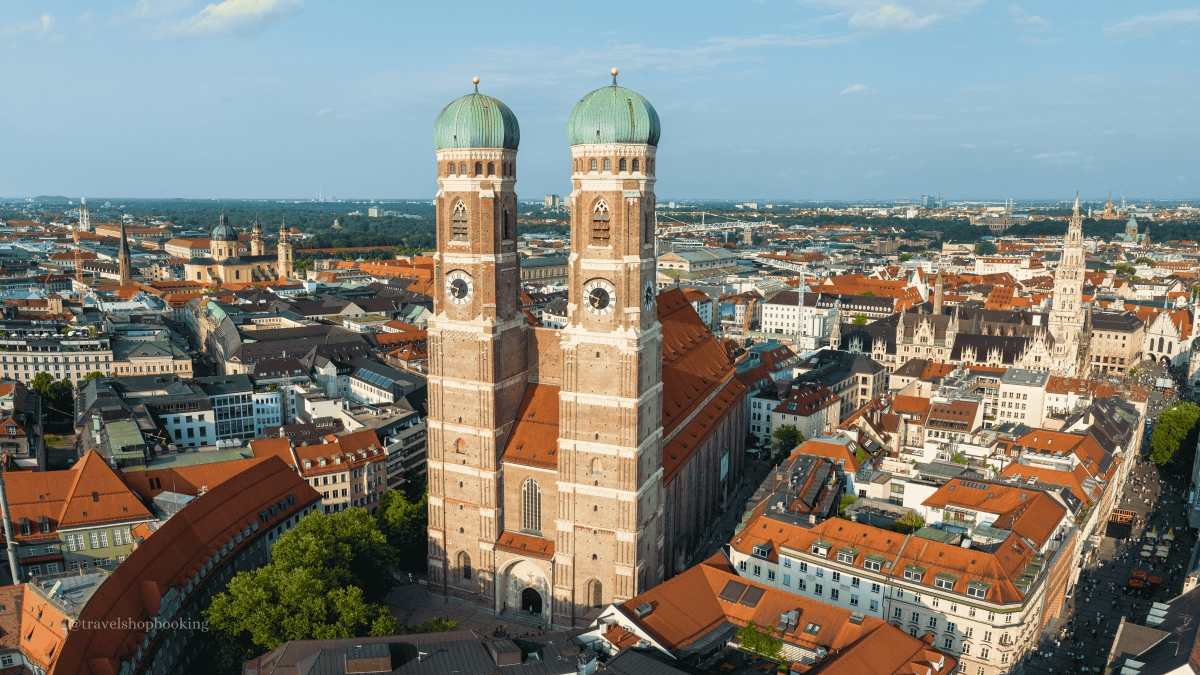
including Karlstor Gate, the Cathedral of Munich (Frauenkirche), the Odeon
Square and Marienplatz (Marien Square)
where the city hall is located. In the evening, we suggest to visit the
Hofbräuhaus, one of the world´s most famous beer halls with its roots in the 16th
century. Enjoy a delicious bavarian dish with a tasty beer. Overnight. (B)
After breakfast, leave the hotel on a guided tour to visit
the most visited monument in Germany, the Neuschwannstein Palace. Departing
from Munich, you’ll first visit Linderhof Castle, a French rococo-style castle
inspired by Versailles itself and surrounded by immaculately manicured gardens.
A quick shopping and photo stop in the charming village Oberammergau will
recharge your batteries for the second half of your day. You’ll arrive at
idyllic Neuschwanstein Castle around 1:00 p.m, where you’re free to enjoy
approximately 4 hours to explore the castle. Wander through the scenic German
countryside on your way to the legendary extravagance of the German castles
Neuschwanstein and Linderhof. Known for their elaborate construction and
world-famous architecture, these two extraordinary structures were dreamed up
by Germany’s own Ludwig II, also known as the Swan King. You’ll soon find out
why many believe Neuschwanstein inspired
Disney’s storybook castles -get ready to feel like you’re living a real-life
fairy tale. Hidden in the seclusion of the mountains, German King Ludwig II
built two of his dream castles: Neuschwanstein and Linderhof. Both testify to
the vision of Bavaria’s fairytale King. Return to Munich. Overnight. (B)
After breakfast,
depart to Salzburg, a picture book Austria that no visitor should miss. The
imposing castle fortress and the stunning alpine scenery of the mountains that
lie beyond contrast with the Old Town and Mozart’s birthplace and soak up the
grandeur of the churches and monumental squares. The city also rewards those
who are prepared to look slightly further afield. Meander the narrow side
streets accompanied by the classical music that seems to waft from each window
and stop by one of the city’s café’s to sample the mouthwatering cake and
coffee. Let Salzburg work its charm on you to leave you with an unforgettable
memory as you absorb its incredible skyline, the ever-present music and its
thousand-year-old history. Overnight. (B)
Breakfast at the hotel. In the morning discover the
picturesque world-famous town between Lake Hallstatt and the steep slopes of
the Dachstein Massif. This small town is considered one of the most beautiful
lake side villages in the world. Not only does it captivate with its fabulous
idyllic & fairytale-like atmosphere, Hallstatt also has a rich history that
dates back to the Neolithic Age. The drive through picturesque towns such as
Fuschl, St. Gilgen and Strobl takes around 1.5 hours. During our 2.5 hours stay
in Hallstatt you can explore the town at your own leisure. The trip back to
Salzburg takes us through Gosau, Russbach and Abtenau. In 1997 Hallstatt and
its surrounding area the Salzkammergut was declared a World Heritage Site by
the UNESCO and in 2012 Hallstatt again went through the media after it became
known that a hair exact replica of the town of Hallstatt exists in southern
China!! Back to Salzburg. After checkout, take the train to Vienna. Upon
arrival, a vehicle will be waiting for you to take you to your centrally
located hotel. Time at leisure. Something you may not miss is the ecueatrian
show and dressage at the Spanish Riding School or a visit to the Opera House.
If interested, we can book optionally your ticktes. Overnight in Vienna . (B)
Breakfast. Today you will visit the imperial city of Vienna,
capital of Austria. You will take a walk through Vienna’s Imperial history.
Starting from the world famous Vienna State Opera and strolling through the
streets and squares where Empress Sisi and Emperor Francis Joseph as well as
Empress Maria Theresa went for a walk you will discover the history and myths
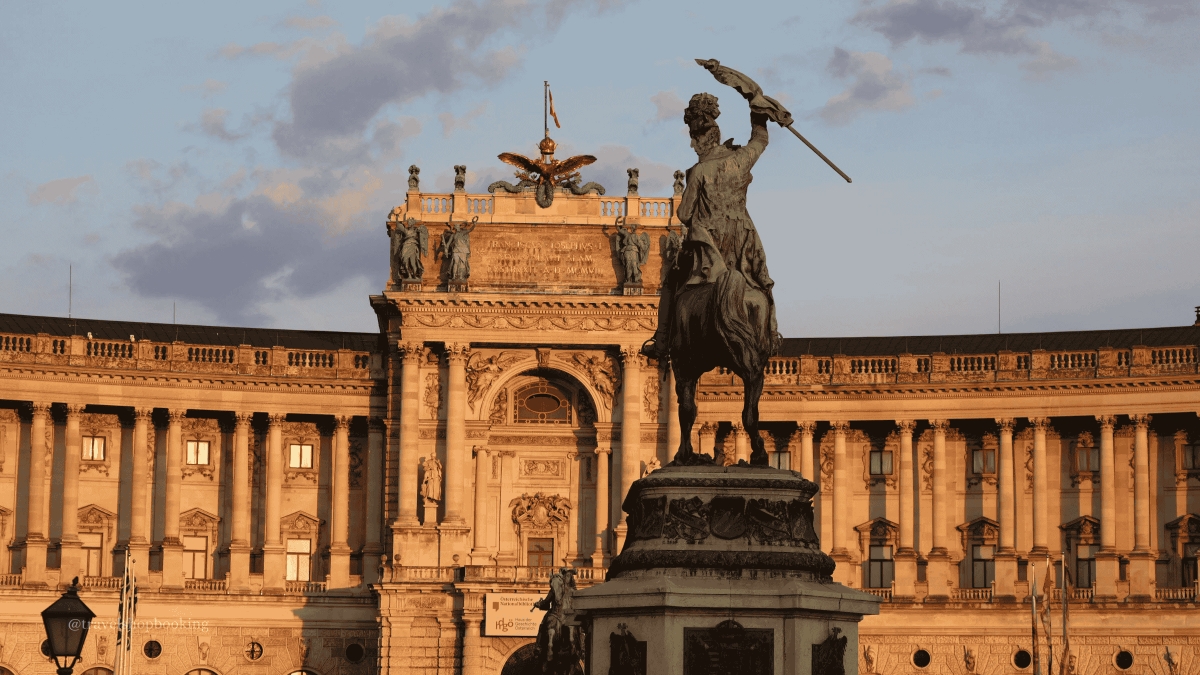
of this city. Once you arrive to the Imperial Palace Hofburg, which is home to
the Spanish Riding School, you will visit the Imperial Apartments and the Sisi
Museum dedicated to the life and death of Empress Elisabeth I. Afterwards you
will pass by St. Michael´s and St. Peter´s church until you finally reach St.
Stephen’s cathedral (exterior visit), where the tour ends. After a short break,
you will continue visiting the Schönbrunn Palace, the imperial family’s summer
residence, also known as the palace of empress Sisi. During our interior visit
we are going to see the splendid rooms and salons. A walk through the
magnificent gardens will give you an idea of the imposing dimensions of this
palace. Back to your hotel and free time for private activities. (B)
Breakfast at the Hotel. Before leaving to the airport for
your flight back home, we will have time to see the city again, go shopping or
just relax at the hotel. After check-in at the airport, end of our services. (B)
9 nights in selected hotels (3*** or 4****)
Breakfast
· Private transfers airport/hotel/airport
· Transfers from train stations to the hotels
· Full day tour visiting the Rhine Valley
§ Day trip Frankfurt - Würzburg - Rothenburg
§ Transfer from Rothenburg to Augsburg visiting Dinkelbuhl and Harburg
Castle.
§ Full day guided tour to Neuschwanstein and Linderhof Castles
§ Guided tour to Hallstatt and Salzkammergut
§ Fulld ay tour in Vienna
v International or domestic flights
v Health insurance and others.
v Train tickets in 2nd class
v Transfer from Hotels to the train station
v Local city taxes (to be paid at hotels)
v Personal expenses
v Tips for drivers, guides and porters
v Meals and drinks not mentioned here.